At Hospital Universitario Fundación Alcorcón

At Hospital Universitario Fundación Alcorcón

At HUFA’s Strategic Innovation Gateway: when innovation turns into action.

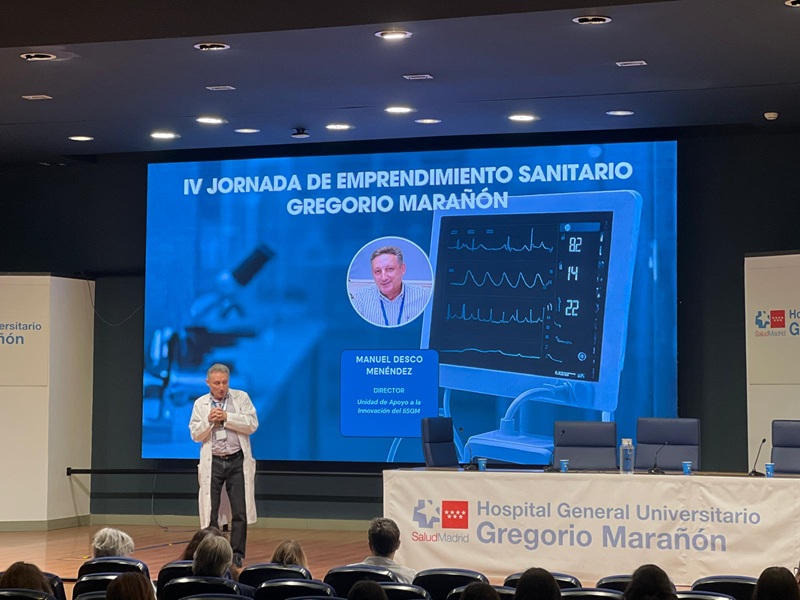
On November 21st, the Hospital Universitario Fundación Alcorcón stopped being just a hospital. For a few hours, it became a space where the real needs of patients and professionals met the technological capability required to turn them into solutions. A vibrant, collaborative, and honest environment where innovation wasn’t presented… it was practiced.

Amid this ecosystem, HEWEGO played an active role by addressing three key challenges for the future of digital health: intelligent patient support, professional assistance, and advanced health education.

areas-de-salud

Challenge 1: A human-centered chatbot for colorectal cancer patients.

Supporting better means listening better. That’s why, in this challenge, we proposed the development of a 24/7 conversational chatbot designed for colorectal cancer patients and built with a deeply human-centered approach.

It’s not just about answering questions: it’s about reducing anxiety, improving understanding of the therapeutic process, and providing real emotional support in coordination with oncology nursing and psychosocial teams.

An assistant capable of clearly, empathetically, and personally explaining diagnoses, treatments, side effects, and wellness care.
A resource that can empower patients… and free up clinical time for what matters most: human care.

areas-de-salud

Challenge 11: A virtual assistant for hospital staff.

Hospitals run on thousands of micro-tasks that consume time and energy. In this challenge, we proposed an AI-powered assistant, available 24/7, to resolve internal questions, procedures, doubts about corporate applications, and administrative processes.

A tool that lightens the bureaucratic load, boosts productivity, and gives professionals back something truly valuable: more time for patient care.

Challenge 14: Smart Health — Education, self-care, and personalized follow-up.

Health education is the first step toward patient autonomy. For this challenge, we proposed a digital platform similar to a “Patient School,” designed to provide verified information on conditions, treatments, and hospital pathways.

But that’s not all:
It includes content on healthy habits, online training modules, and the foundation for a future app to record medication, side effects, and clinical progress.

A solution that creates continuity beyond the consultation and builds a bridge between medical knowledge, self-care, and personalized follow-up.

areas-de-salud

A meeting that opens doors.

In our meetings with the medical teams and hospital management, we felt something very clear: there is willingness, there is need, and there is fertile ground to build real projects.
The feedback was excellent, and we are already coordinating a follow-up meeting to move forward with an initial joint project.

What happened during this event was special because it didn’t stay on the surface. There was debate, challenge, refinement. And from that exchange emerged opportunities that can truly transform the experience of both patients and professionals.

At HEWEGO, we continue moving in the same direction.

We believe in a more human, more accessible, and more connected healthcare.
We believe in solutions that combine technology + clinical expertise + user experience.
And above all, we believe in collaboration as the engine of change.

HUFA’s Strategic Innovation Gateway reminded us that innovation doesn’t happen in isolation.
It happens when we work together.

The best solution for the health challenge

The best solution for the health challenge

Open innovation as a bridge between corporates and startups.  

Open innovation is key to connecting the challenges of large corporations with the agility and creativity of startups.
And last week, at the RETECH Innovation Forum organized by the Community of Madrid, we experienced it firsthand.

HEWEGO was selected as the best solution for the health challenge within the Digital Health Node of RETECH Madrid, an initiative that promotes collaboration between established companies and emerging projects with a transformative vision.

Our approach —translating scientific evidence into actionable steps, designing personalized wellbeing journeys, and humanizing technology— was recognized as a distinctive proposal in an environment where innovation and health go hand in hand.

areas-de-salud

A recognition that drives us forward.


This milestone strengthens our mission: to make digital health reach people in a practical, approachable, and sustainable way.
Because beyond tools or technology, we believe that real change begins with how we accompany, listen to, and empower each person to take better care of themselves.

Special thanks to Ignacio Escolano @Platolimpio for the images provided.

Personal Touch at Infanta Sofía University Hospital

Personal Touch at Infanta Sofía University Hospital

Innovation with a Personal Touch at Infanta Sofía University Hospital.  

On September 26th, we had the opportunity to experience the Strategic Innovation Gateway first-hand at the Infanta Sofía University Hospital. It wasn’t just another event—it was a space where innovation became tangible and collaboration turned into the true driving force for the future.

HEWEGO at the heart of the experience.

Our colleagues Gonzalo Cámara and Daniel Ordax actively participated in the working groups, analyzing real use cases across different healthcare settings. We witnessed how artificial intelligence, collaboration, and personalized health are no longer promises of the future, but solutions already being applied today to improve the experience of both patients and professionals.

areas-de-salud

From conversation to action.

The most inspiring part was seeing how a hospital can become a living ecosystem of innovation. Every idea shared, every prototype, and every proposal brought us closer to a healthcare system that is more human, more connected, and more efficient.

We want to give special thanks to Guillermo Ceñal Pérez and his team for opening this collaborative space, and to all the professionals, startups, and companies that joined us on this journey.

At HEWEGO, we believe innovation is built from lived experiences. This event proved that when visions align and efforts combine, healthcare transformation becomes unstoppable.


7 Steps to Emotional Balance

7 Steps to Emotional Balance

7 Steps to Emotional Balance.  

Emotions are part of our daily lives. Sometimes they drive us forward, but other times they overwhelm us and leave us without answers. What can we do in those moments? At HEWEGO, we believe it’s not about running away from emotions, but about learning to walk with them—step by step.

This video suggests a method of 7 steps to manage intense emotions and transform them into an opportunity for balance:

  1. Choose the emotion that overwhelms you the most and that you want to work on.
  2. Connect it to the present, as if it were happening right now.
  3. Pause, breathe, and avoid reacting immediately.
  4. Give it space, notice what’s happening in your emotional world.
  5. Take a few deep breaths until you feel the intensity decrease.
  6. Stay present, observing the experience without judgment.
  7. Build awareness: the more familiar you become with that emotion, the less power it will have over you.
health-areas

Breathing as your ally.

Throughout the process, breathing is the central tool. It helps us pause, gain perspective, and recover clarity. What may seem like a simple act is, in fact, a powerful resource that runs through all our programs at HEWEGO: from stress management to pregnancy, creativity, and sleep.

A daily practice

Emotional balance doesn’t happen overnight—it’s built. These 7 steps are not a magic formula, but a path to practice. Next time an emotion overwhelms you, remember:
– Don’t run away.
– Don’t react immediately.
– Breathe and observe.

The power of your emotions is not in their intensity, but in how you choose to handle them.

From the Inside… Out

From the Inside… Out

humans-made-for-by

Inside-out health in organizations. 

We live in times of constant change. Every day brings new business models, new ways of social interaction, new sources of leisure, new ways to expend energy—even to generate it. Never before have we been exposed to so many changes and innovations in such a short time.

A new paradigm in organizations: from outside-in health to inside-out health.

These continuous changes make yesterday’s models obsolete and emerge at such speed that adapting to them at the same pace is a real challenge. In one way or another, we all live in a VUCA environment (Volatility, Uncertainty, Complexity, and Ambiguity). This often requires us to rethink how we face challenges—or even create entirely new ways to tackle them.

Regarding Health in Organizations, Occupational Risk Prevention has helped avoid many health problems caused by workplace accidents and occupational diseases. Legislation, provision of Personal Protective Equipment, communication of prevention measures and standards, etc., have been and continue to be very useful in work environments where both the work and its risks are primarily physical. However, today’s predominant productive model and our socio-cultural environment demand a comprehensive approach to health, one that considers psychosocial risks and people’s lifestyle habits.

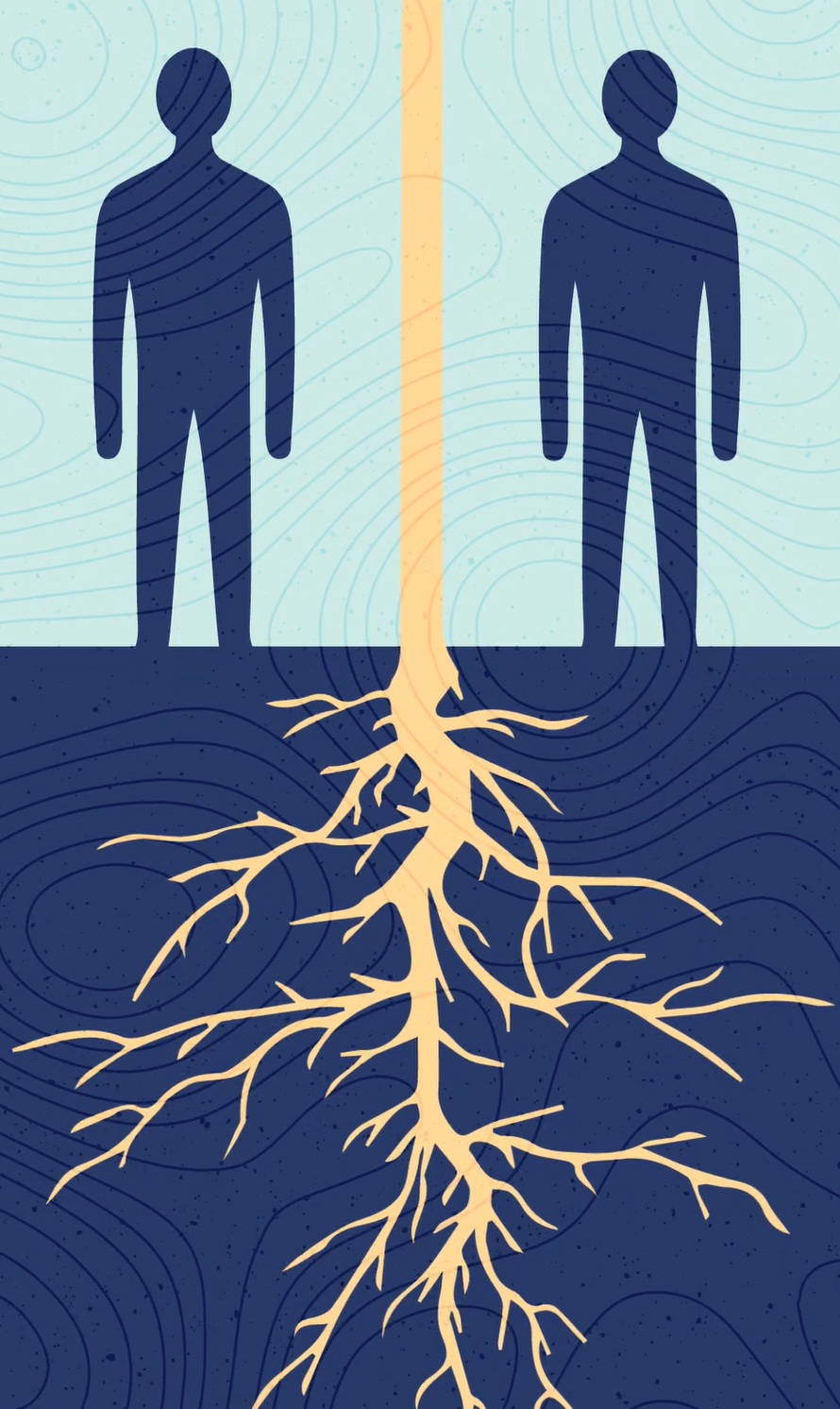
Health depends on people’s skills, habits, and motivations.

In a physical environment, health measures are provided from the outside, such as a regulation or a protective device. Compliance is relatively easy to monitor. We can forbid entering a worksite without a helmet and harness and observe if the rule is followed. But we cannot forbid someone from coming to work stressed, preoccupied with family problems, or with high cholesterol. In these cases, health depends on people’s skills, habits, and motivations, and the factors influencing well-being and performance go far beyond the workplace.

If organizations truly want to improve people’s health, they must guide them through a journey that starts with three questions:

What aspects of my health can I improve?

Why should I improve them?

How can I improve them?

From this perspective, organizations and institutions must help ensure that health-promoting measures come from the people themselves, through motivation, knowledge, and training. Companies aspiring to be Healthy Organizations should adopt an inside-out model, making the person the engine of their own health, engaging them, and providing the means to take charge of their well-being in a holistic way.